FONDATION PINAULT
FOR CONTEMPORARY ART
BOULOGNE BILLANCOURT
FRANCE, 2001
CULTURE
PR–192
The François Pinault Foundation for Contemporary Art, which was initially planned to be located on the site of the former Renault factories on Seguin Island, was the subject of a competition in 2001 for its construction.
PROGRAM
Creation of a contemporary art foundation: exhibition halls (22,000 m²), restoration workshops, amphitheater, television studios, bookstore, shops, restaurants, video café, esplanade, outdoor exhibition spaces.
DÉTAIL
Situation
Boulogne-Billancourt, France
Year
2001
Status
International contest
Site area
19 000 m²
Built-up area
35 800 m²
Project management
Artemis, Paris
Project implementation
Dominique Perrault, architecte, urbaniste
Design offices
Guy Morisseau, Trouvin Serequip, Jean-Paul Lamoureux
DESCRIPTION
The DPA agency sees the Foundation as a gift, an act of sharing, which must be embodied in the opening of the collection to a wide audience, invited to wander around a unique place. This has resulted in a program organized around seven main themes. The first aims to preserve the island’s foundations as they are, so as not to distort the identity of the place. The second and third themes focus on points of contact with water, one through the creation of a promenade around the museum that blends into the existing landscape, the other through a slightly sloping plane descending towards the river. Next comes the fourth theme: the building’s “great robe,” a metal mesh that envelops it and creates a kind of narthex, an in-between space that symbolically intertwines the notions of center and margin.
READ MORE
This space serves the four buildings, each of which has a specific function (exhibition, conservation, heritage, communication), and facilitates visitor flow. The sixth axis concerns the exhibition galleries: arranged on a single level, they are interconnected and designed to house works in a wide variety of formats. Finally, so as not to interfere with the visitor’s aesthetic experience, the last axis of the program focuses on the “silence of the materials” chosen: concrete slabs, sheet glass, and metal mesh. In this way, the different elements of the design, in constant interaction, manage to create an ensemble that is both welcoming and mysterious.
On the models, the mesh is suggested by fishnet stockings or tulle, which, in a single gesture, envelop and lighten the building. Its transparency varies depending on the location, modulating perceptions and atmospheres. In detail, the mesh is neither a tent nor packaging: it is a living fabric, a second skin that acts as the integument of buildings, giving them body, substance, and mystery.
It clings to all the edges of the volumes, creating both private, almost secret spaces and public areas where everyone can circulate as they stroll around. This metal, stretched like a fishing net and featuring a specific weave, filters natural light and gives the architecture a unique expressiveness. The mesh covers facades and roofs, creating new intermediate spaces between sky and earth, immersed in nature.
RELATED PROJECTS
GROUNDSCAPE
R 002
Research
FRAPOTEL
RE 003
Research
SAN PELLEGRINO THERMAL BATHS
PR 362
Hospitality
Bergamo
THE FRENCH NATIONAL LIBRARY
PR 083
Culture
Paris

CULTURAL COMPLEX LAUSANNE
PR 505
Culture
Lausanne
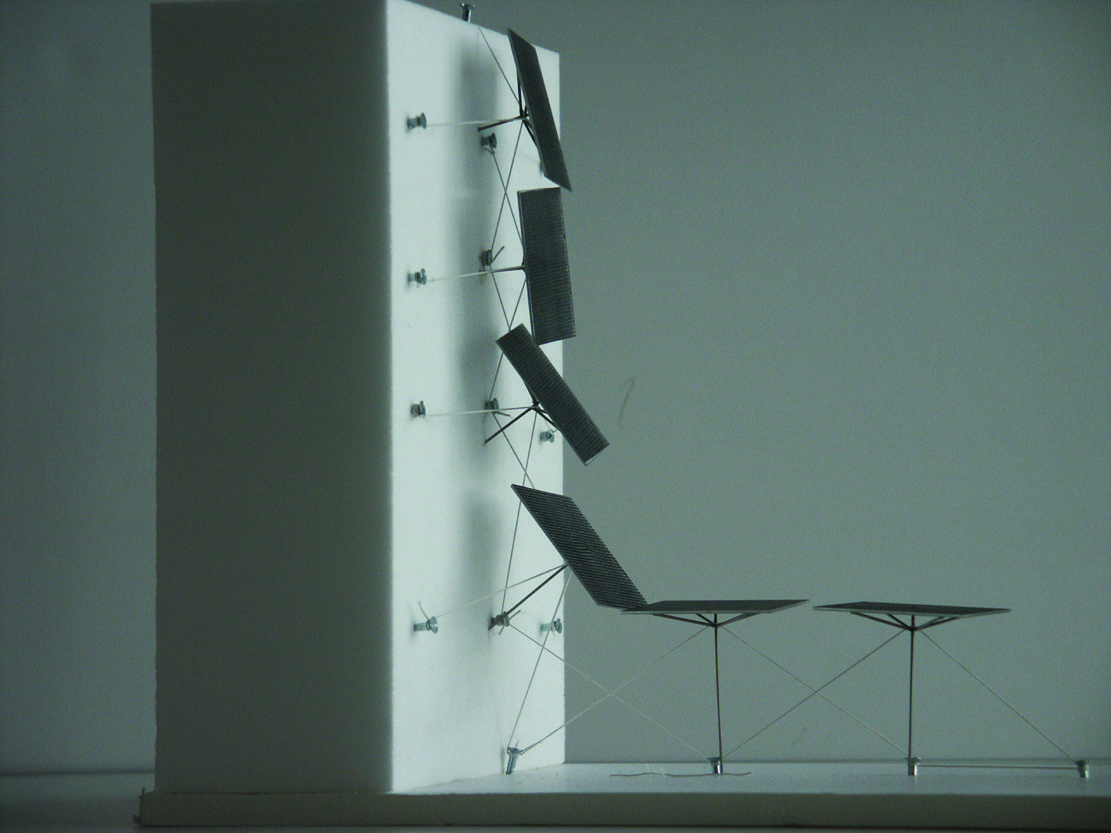
CCTV BEIJING
PR 211
Workplace
Beijing
EXHIBITION HALL LEÓN
PR 555
Culture
León
KOLONIHAVEN INSTALLATION
PR 107
Exhibition
Copenhaguen
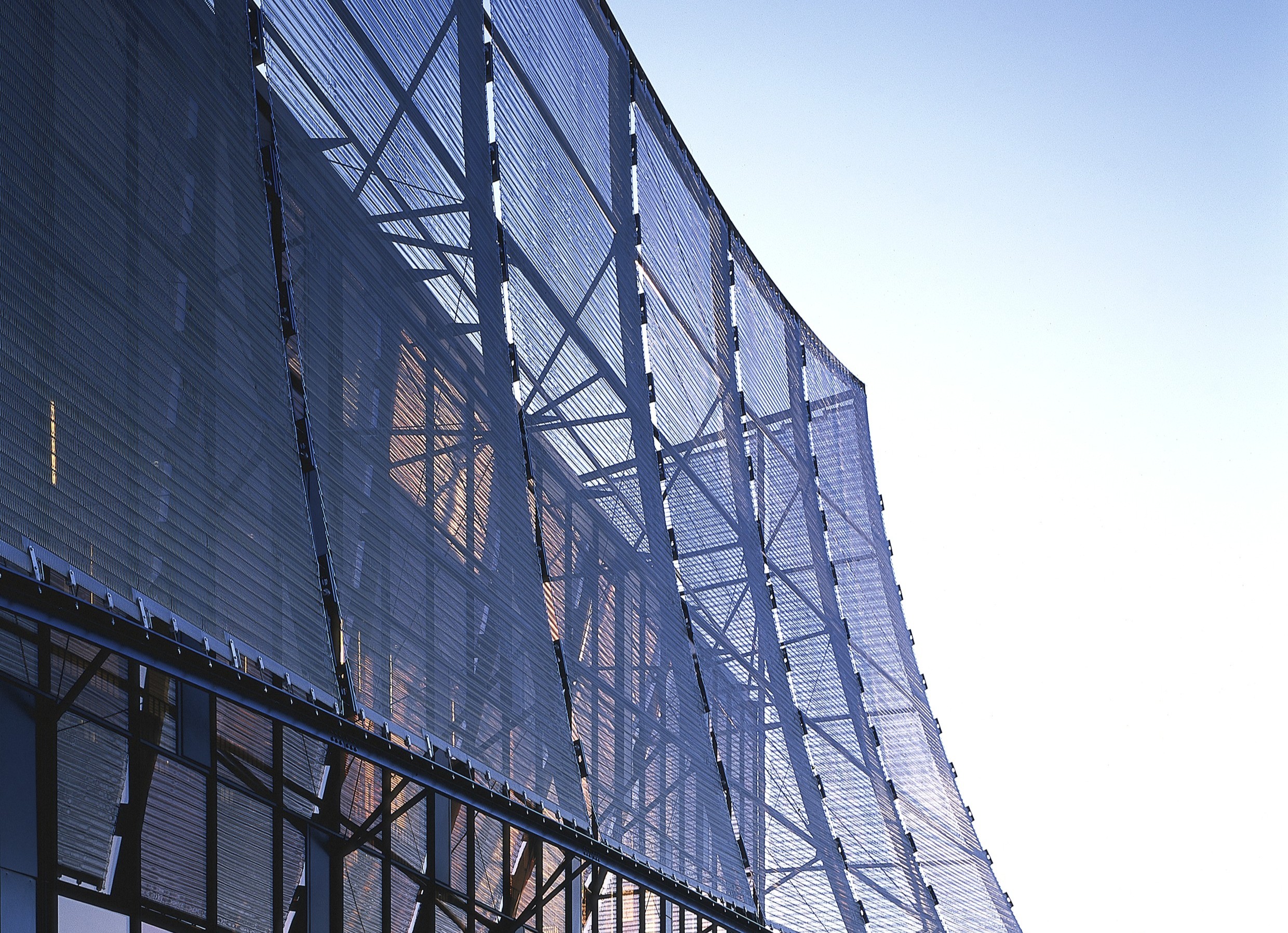
GRAND THEATER
PR 487
Culture
Albi
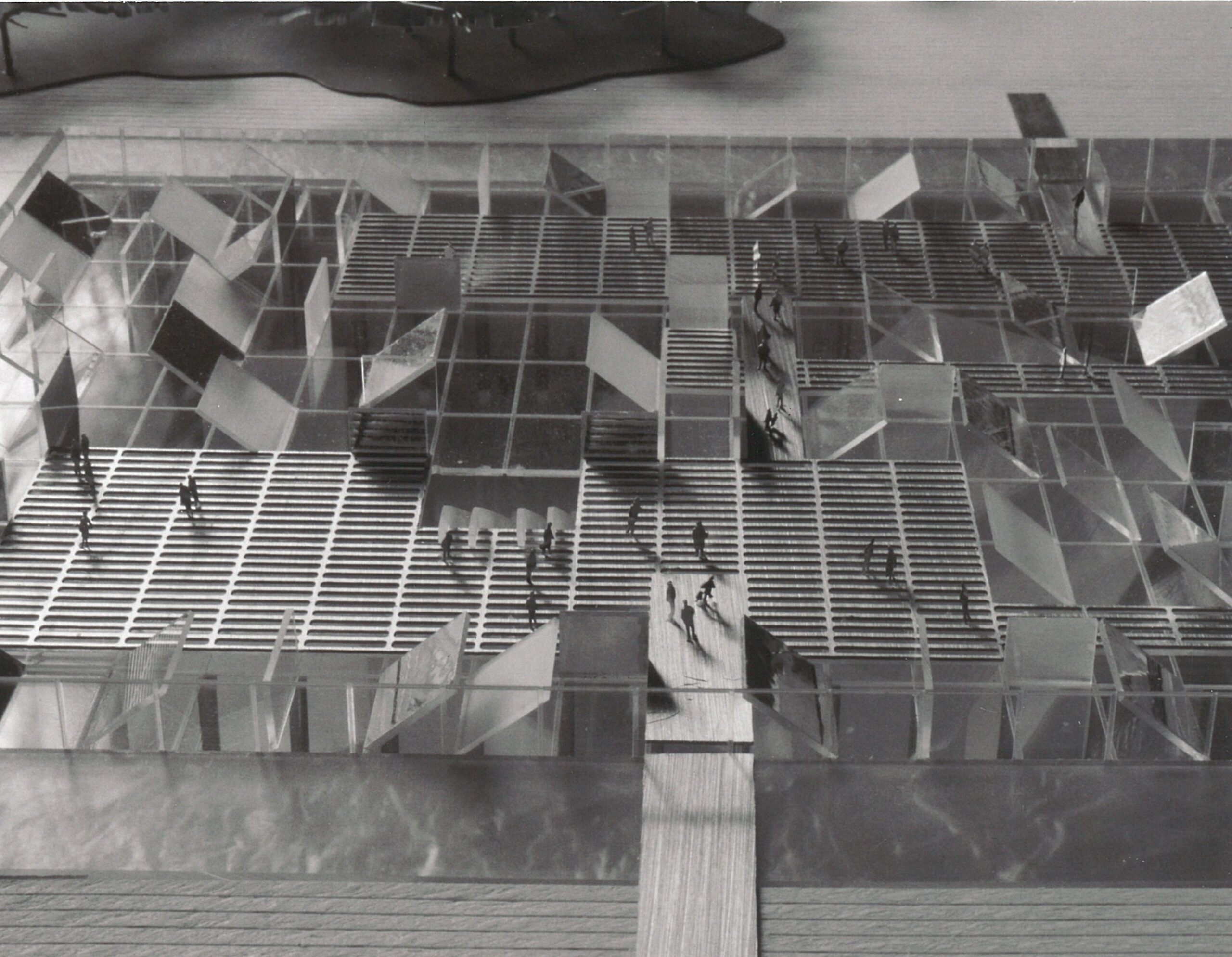
KANSAI-KAN LIBRARY
PR 099
Culture
Kyoto
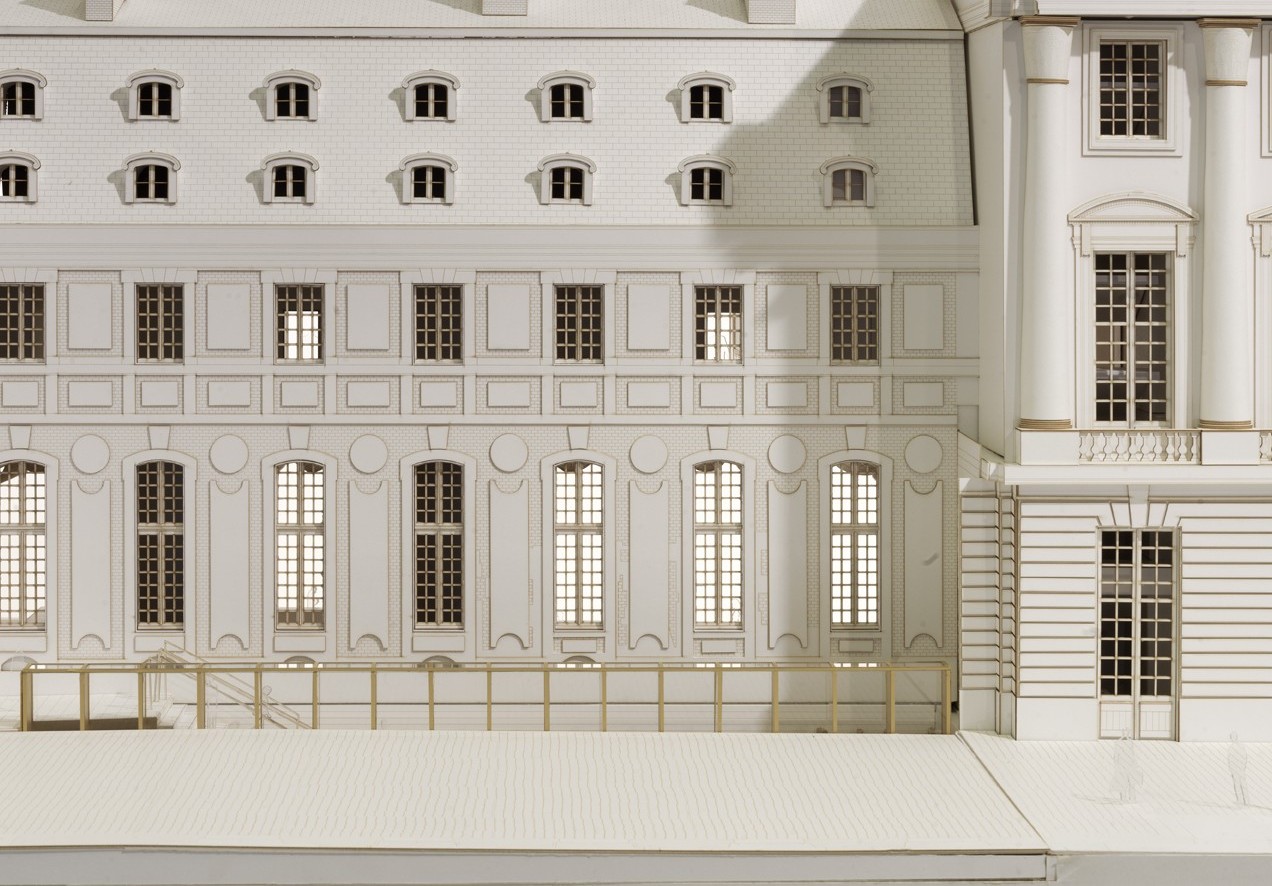
DUFOUR PAVILLION
PR 517
Culture
Versailles
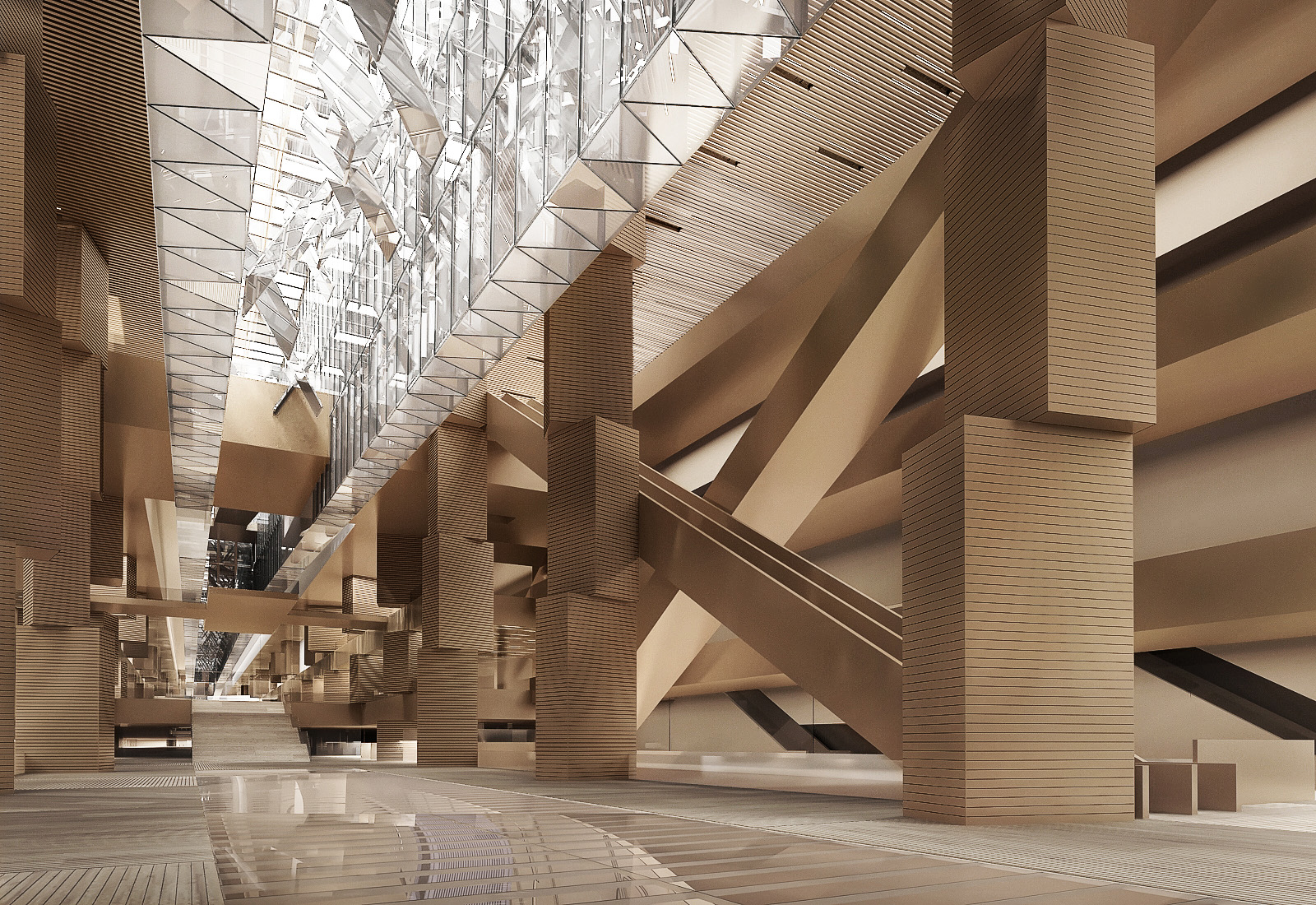
LIGHTWALK – GANGNAM INTERNATIONAL TRANSIT CENTER
PR 669
Masterplan
Seoul
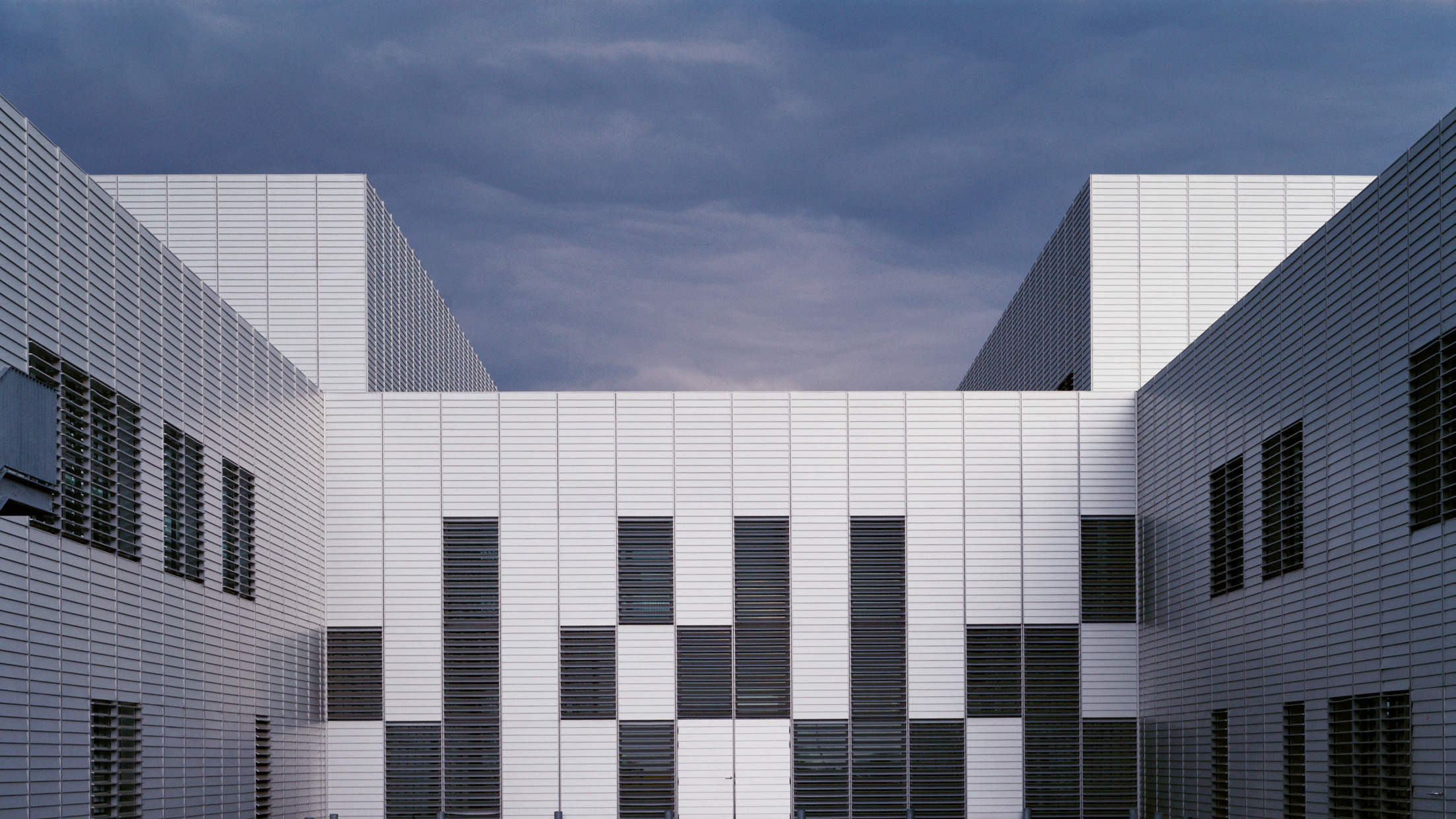
TECHNICAL CENTER FOR BOOKS
PR 085
Culture
Bussy-Saint-Georges
MUSEUM OF MODERN ART
PR 113
Culture
New York
MARIINSKY THEATER
PR 238
Culture
St-Petersbourg

NOTRE-DAME-DU-LAUS SANCTUARY
PR 443
Culture
Gap
BUSAN EXPO 2030
PR 641
Masterplan
Busan
MESH / MAILLE
RE 001
Research
