MPREIS WI
SUPERMARKETS
TYROL
AUSTRIA, 2000-2003
RETAIL
PR–161
The Austrian supermarket chain MPreis decided to break away from the generic architecture that often characterizes large stores and is frequently viewed negatively. To achieve this, it collaborated with numerous architects to design its stores.
PROGRAM
Three supermarkets and shops
DETAIL
Situation
Zirl & Wattens, Tyrol, Austria
Year
2000-2003
Status
Direct order
Built-up areas
1 790 m², 2 688 m² and 2 000 m²
Project management
MPreis Warenvertriebs GmbH, Austria
Project implementation
Dominique Perrault, architect, urbanist
Partner
Rolf Reichert – RPM
Design offices
Guy Morisseau, Alfred Brunnsteiner, Tivoliplan, HG Engineering, Jean-Paul Lamoureux
Interior architect and design
Gaëlle Lauriot-Prévost
DESCRIPTION
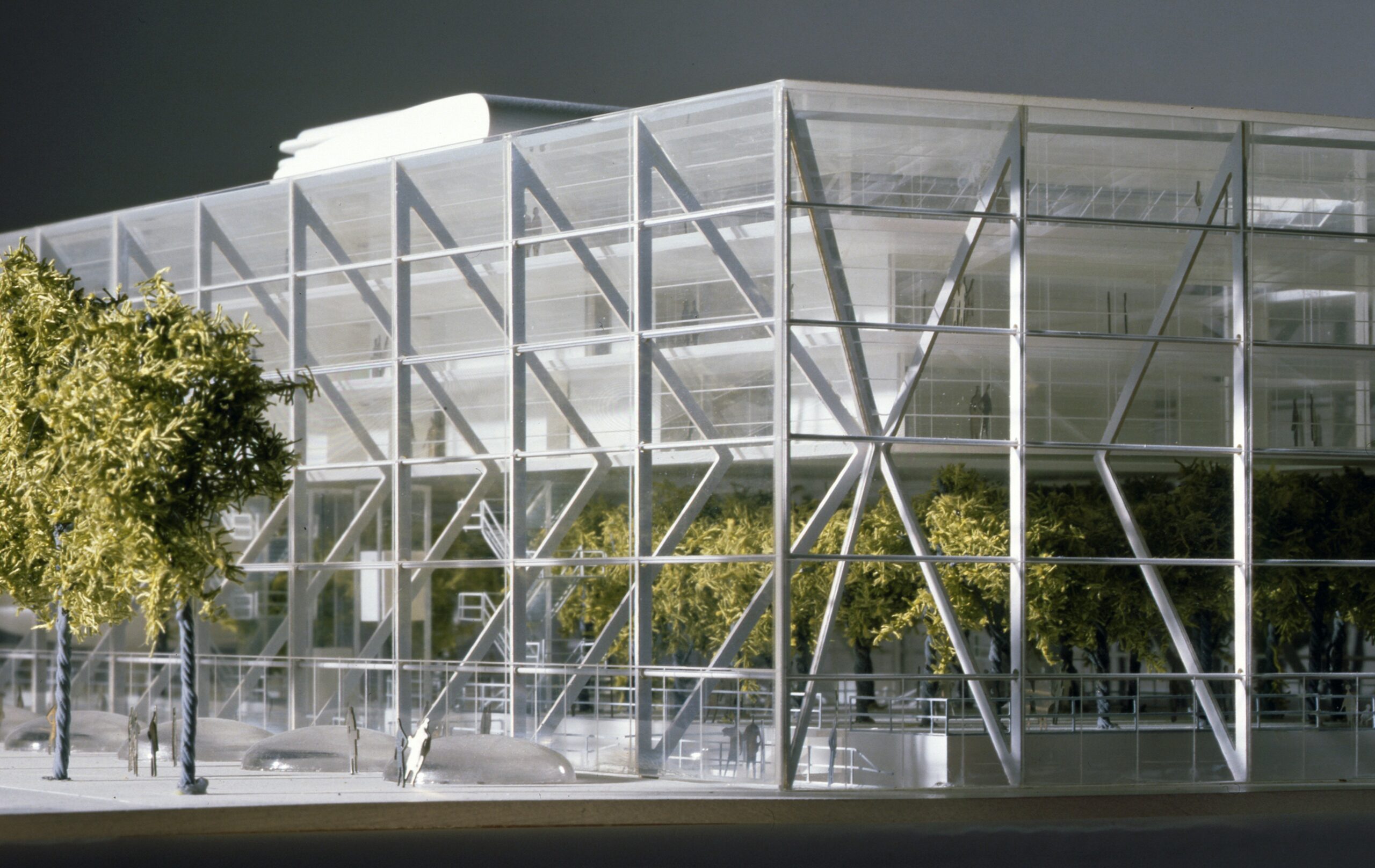
In fact, beyond their commercial function, these somewhat unusual supermarkets are designed to be attractive places, incorporating cafés, children’s play areas, parking lots, and even a police station in one of them. It was in this context that DPA was asked to design three supermarkets, first in Wattens, then in Zirl. In each case, the agency developed a functional, technical architecture in tune with its immediate environment, whether urban or natural.
READ MORE
In Wattens (MPreis WII), for example, the main volume is raised above ground level and connected to the street by ramps with varying gradients, thus redesigning the topography, which is now punctuated by green spaces. In the MPreis WI supermarket, a dynamic geometry, incorporated into the body of the building, has been planted with trees. These seem to have moved from the nearby forest to invade the new complex and associate it with the wide expanse. This ambiguity between nature and architecture is extended by the interplay of surfaces that filter or reflect light and the surrounding landscape. The transparency of glass, the reflectivity of polished metal, and the permeability of metal mesh are thus used in a complex pattern of distributing perceptions both inside and outside the buildings.
Local was the watchword. Until then, the operator had only trusted architects from Tyrol to design its supermarkets. It wanted its business to serve the community, to always have something to accompany it, such as a shop, a café, or a meeting place. Here, there is a police station and an underground car park. Local, and open to the sky and the mountains of the region. As you enter the stalls, natural light extends the landscape and public space. A real local shop, where you go several times a day, in small doses, because the place is first and foremost a space for socializing. The mesh covering around the program’s volumes reflects this logic of openness: from the store, the street and life are within sight. From the outside, depending on the time of day or night, the stalls appear filtered or transparent. The supermarket is no longer on the outskirts of the city, it is a neighborhood in its own right.
RELATED PROJECTS
METAL-57
METAL-57
PR 623
Work place
Boulogne-Billancourt
MORLAND ADMINISTRATIVE CENTER
MORLAND ADMINISTRATIVE CENTER
PR 508
Mixed Use
Paris
GKD FACTORY
GKD FACTORY
PR 251
Industrial
Cambridge
GARE VILLEJUIF – GUSTAVE ROUSSY
GARE VILLEJUIF – GUSTAVE ROUSSY
PR 655
Transport
Villejuif
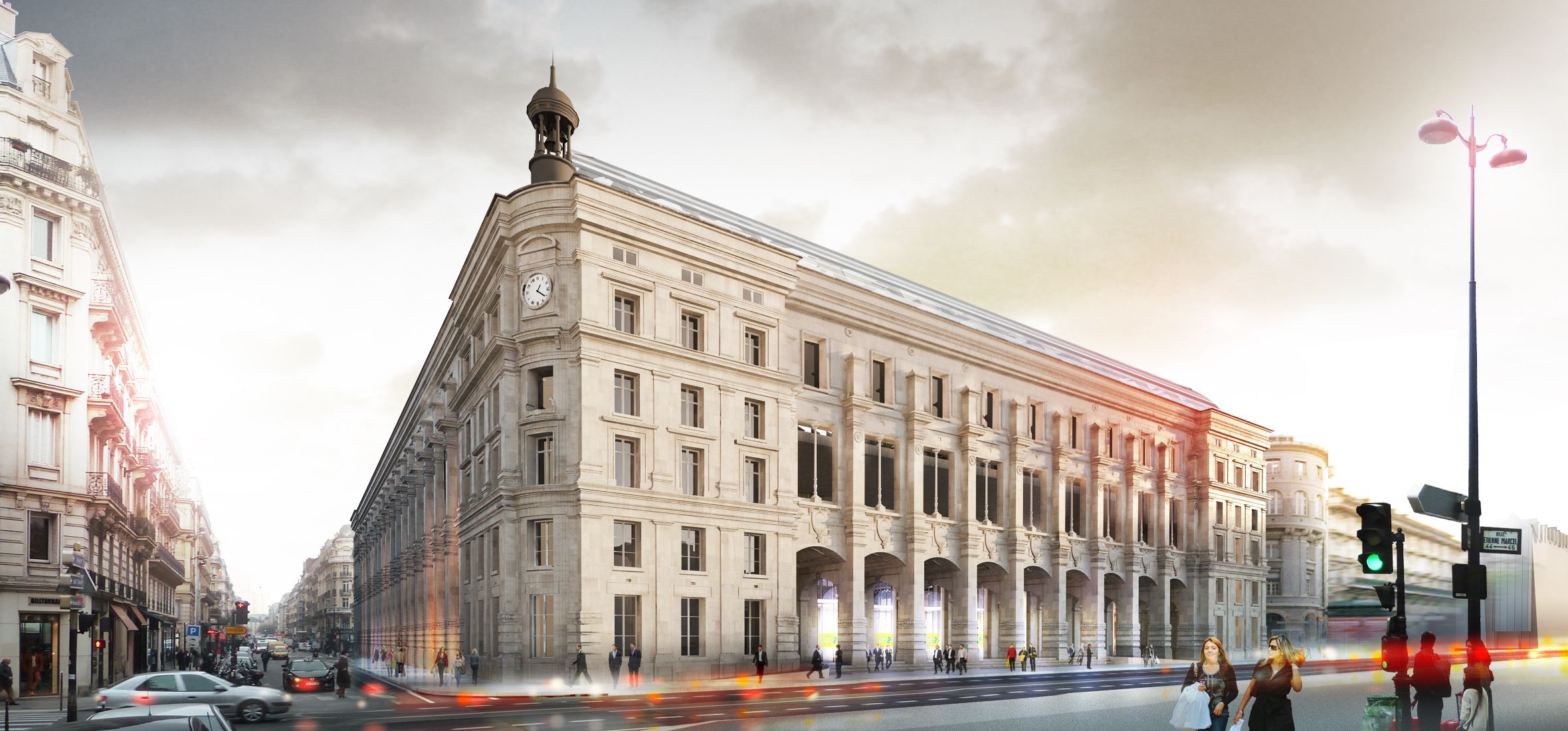
LOUVRE POST OFFICE
LOUVRE POST OFFICE
PR 607
Work place
Paris
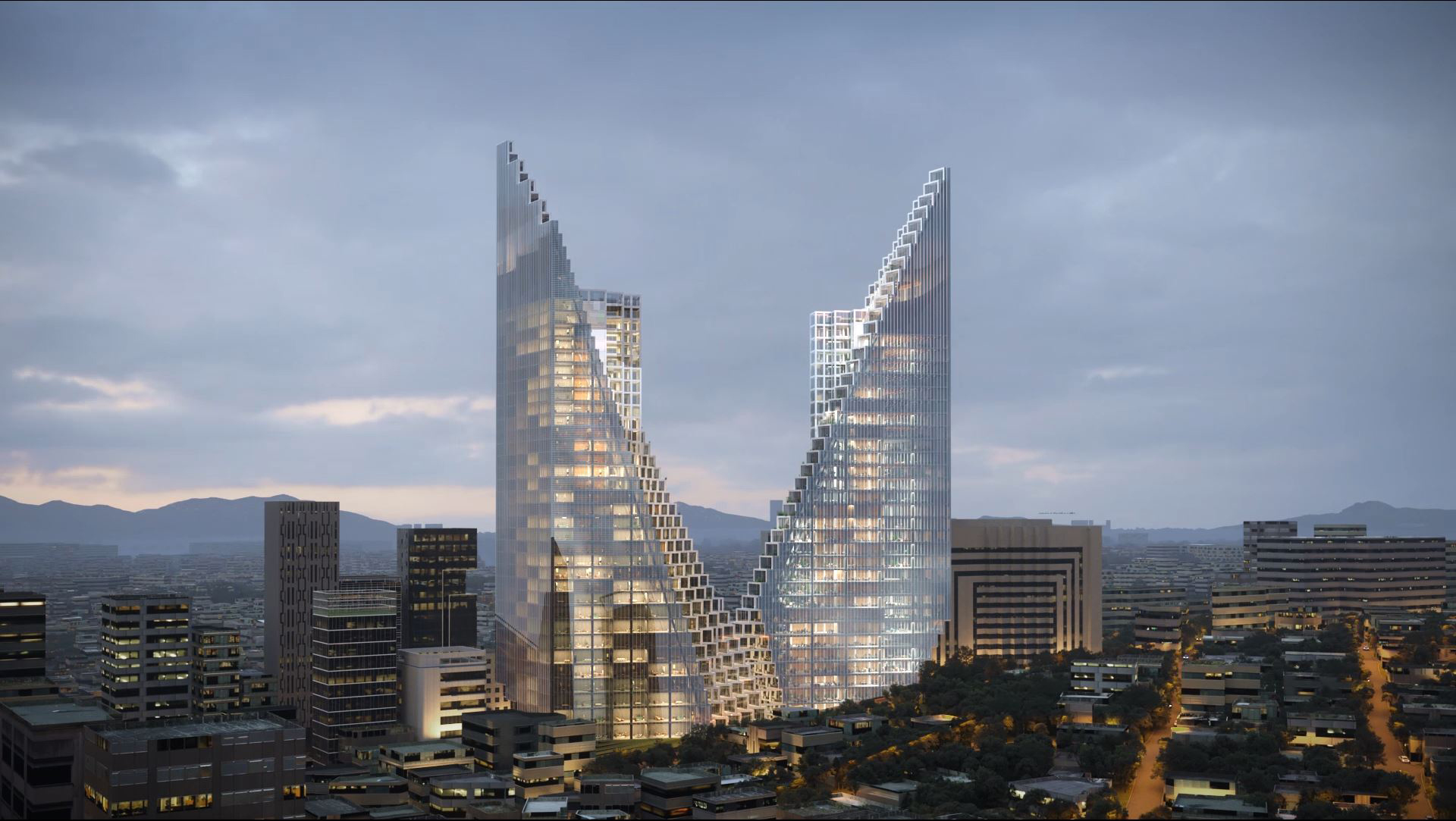
TWIN PEAKS – BONGEUNSA-RO 120
TWIN PEAKS – BONGEUNSA-RO 120
PR 667
Tower
Seoul

NOTRE-DAME-DU-LAUS SANCTUARY
NOTRE-DAME-DU-LAUS SANCTUARY
PR 443
Culture
Gap
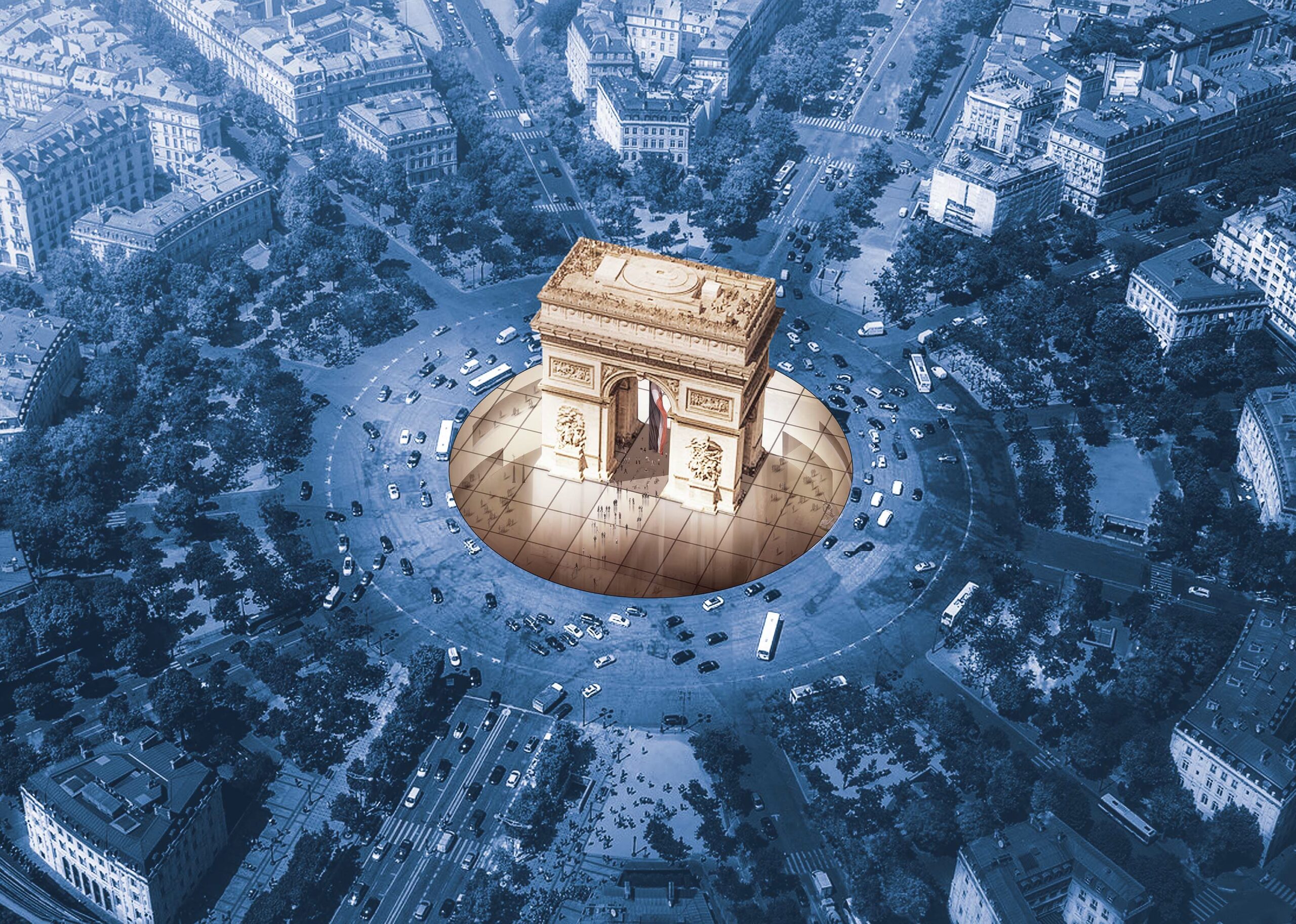
GROUNDSCAPE
GROUNDSCAPE
R 002
Research
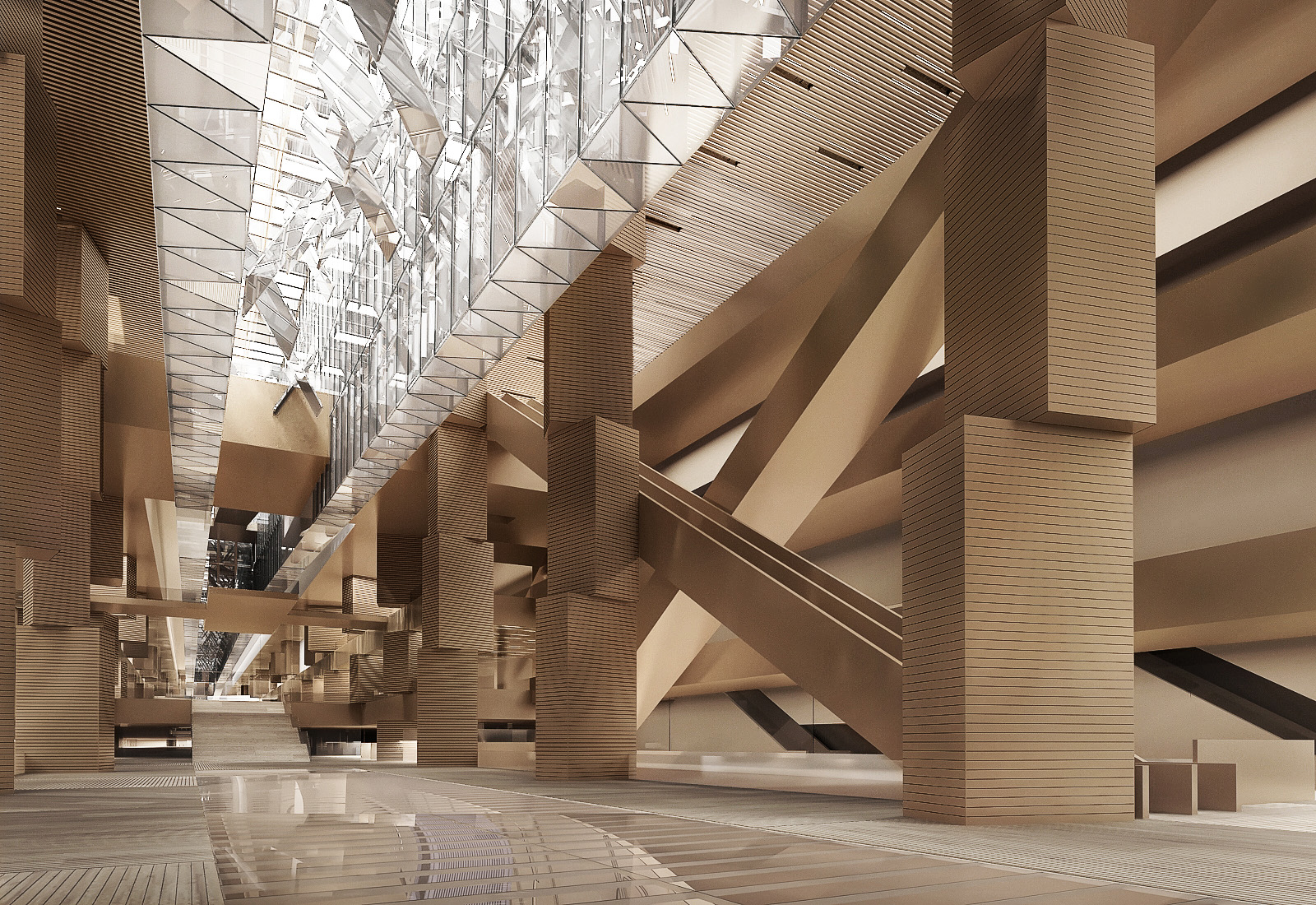
LIGHTWALK – GANGNAM INTERNATIONAL TRANSIT CENTER
LIGHTWALK – GANGNAM INTERNATIONAL TRANSIT CENTER
PR 669
Masterplan
Seoul
HEAD OFFICE OF CANAL+
HEAD OFFICE OF CANAL+
PR 038
Workplace
Paris
