NH MILANO FIERA
MILANO
ITALY, 2006-2009
TOWER
PR–384
The hotel built in the new Rho-Pero exhibition center northwest of Milan is the result of conceptual research into monolithic structures.
PROGRAM
The two towers, measuring 60 and 67 meters in height, house 400 three- and four-star hotel rooms, conference and meeting rooms, and 3,700 square meters of public spaces (bars, restaurants, etc.).
DETAIL
Situation
Fiera di Milano, Rho-Pero, Milano, Italy
Year
2006-2009
Status
International competition, winning project
Site area
15 500 m²
Built-up area
23 800 m²
Project management
Sviluppo Sistema Fiera e Fondazione Fiera Milano, Milan
Agent
Consorzio Cooperative Costruzioni, Cooperativa Muratori e Braccianti di Carpi, Marcora Costruzioni, Pessina Costruzioni
Architect
Dominique Perrault, architect, urbanist
Design offices
Ing. D. Insinga, Pool Professionale, Sinesis, Marion Consulting, Luca Bergo
DESCRIPTION
Formally, the building consists of two twin towers, parallelepipedic in shape with a square base. The typology that inspired the agency’s approach to the project is that of the vernacular towers of Bologna and San Geminiani, which are interesting both for the signal effect they create in the city and for their accidental inclination, which is considered here as an architectural strategy.
READ MORE
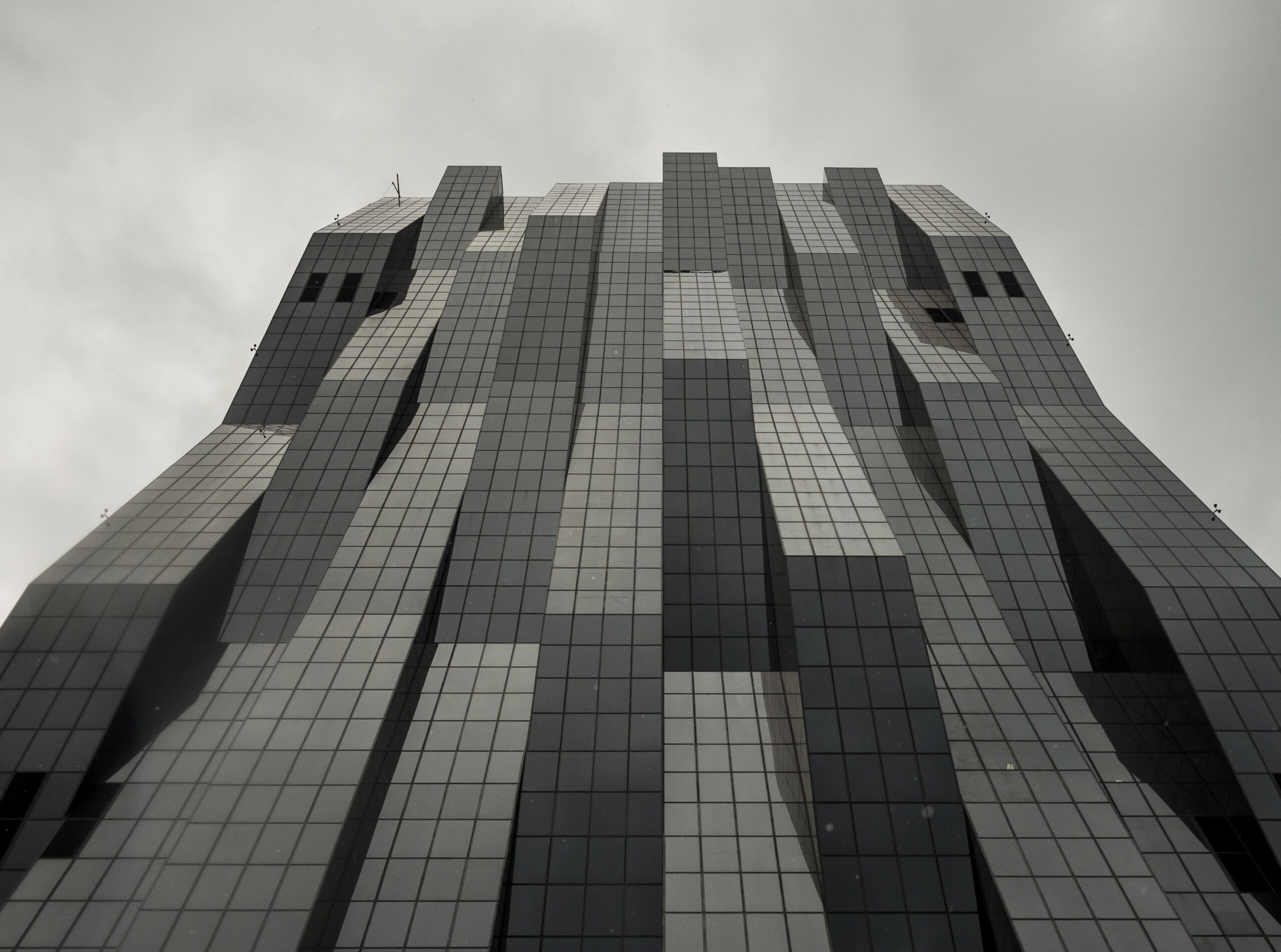
Transposing these references, the profiles of the two towers of the Milanese hotel—one 20 stories high, the other 18—form a 5° angle to the vertical. The two buildings are positioned along a diagonal axis, creating two recessed entrance areas. While visually they appear as two imposing blocks, their obliquity creates an effect of imbalance and tension with the ground, shifting the codes of architecture towards a plastic abstraction. In addition, the materiality of the facade cladding, a superimposition of sandstone slabs and black glass paste slabs, gives them a massiveness that accentuates the minimalism of their volume. As for the windows, whose positioning suggests a random arrangement, they negate the idea of order to intensify the surface effect of the envelope, which covers the building like a homogeneous pattern.
RELATED PROJECTS
TIMBER MARINA TOWER
PR 664
Tower
Vienna
LA LIBERTÉ
PR 410
Mixed Use
Groningue
THE BLADE TOWER B2-2
PR 421
Tower
Seoul
FUKOKU TOWER
PR 400
Tower
Osaka
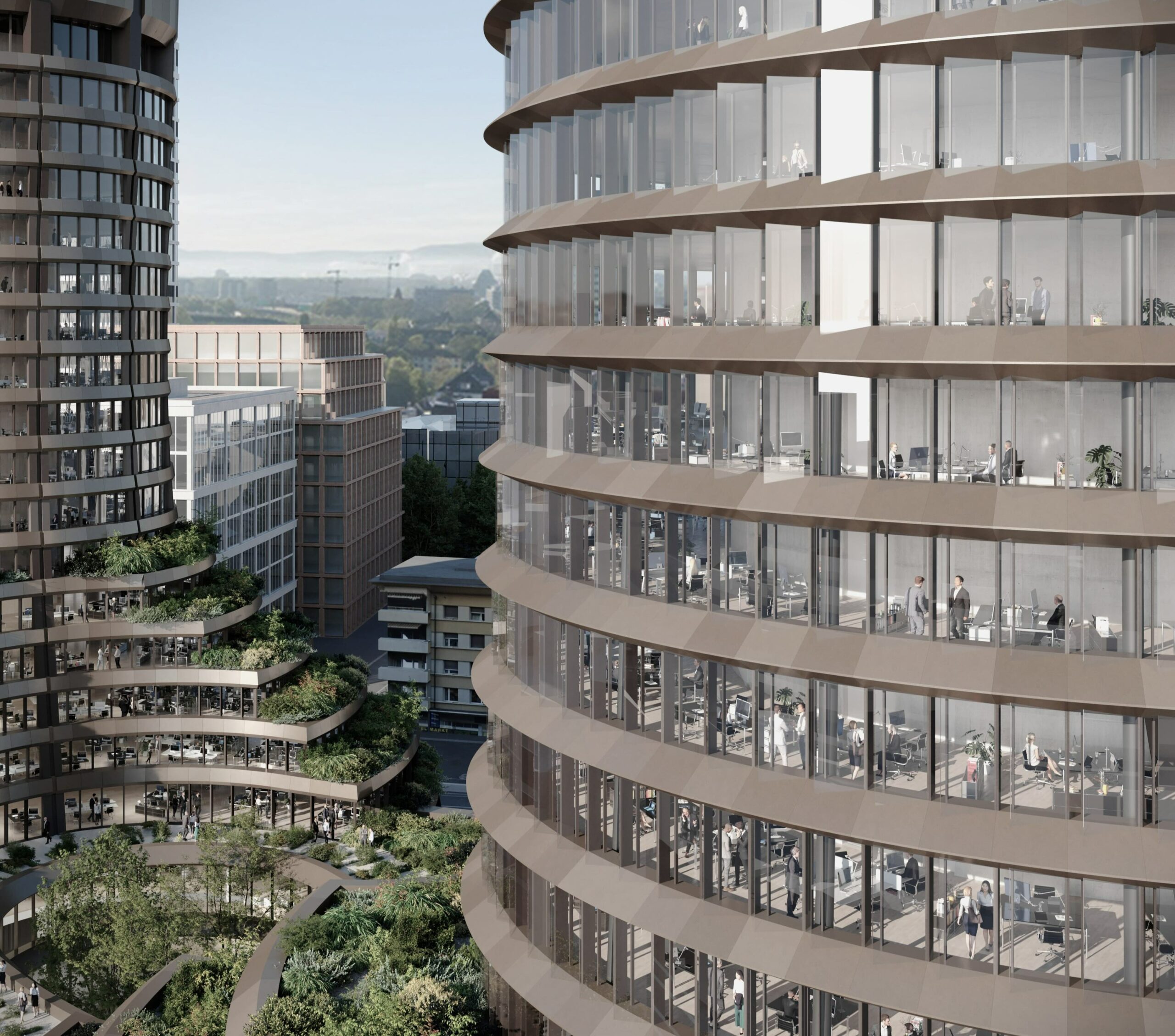
BANK FOR INTERNATIONAL SETTLEMENTS
PR 635
Tower
Basel
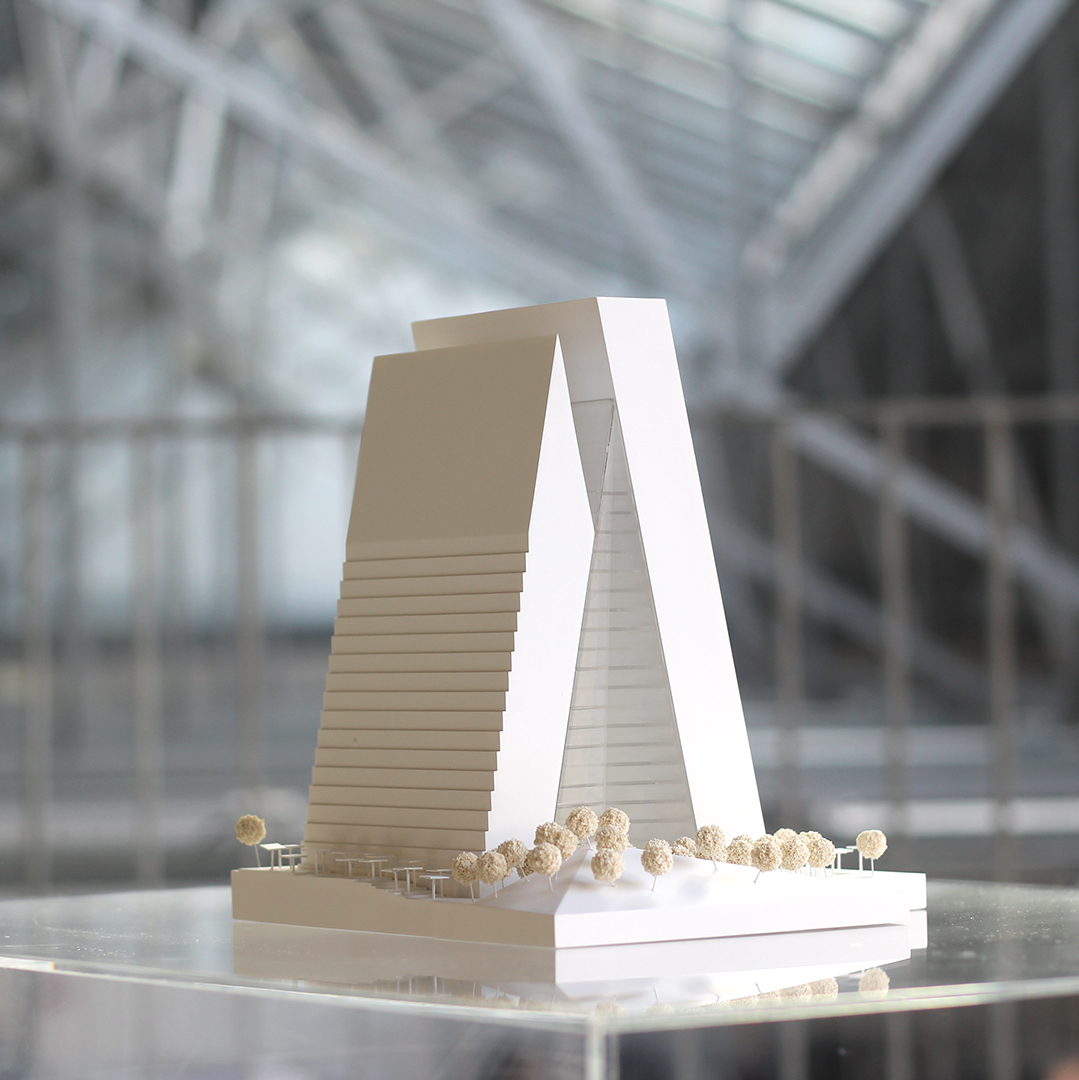
COMMON HOUSE
PR 627
Tower
Düsseldorf
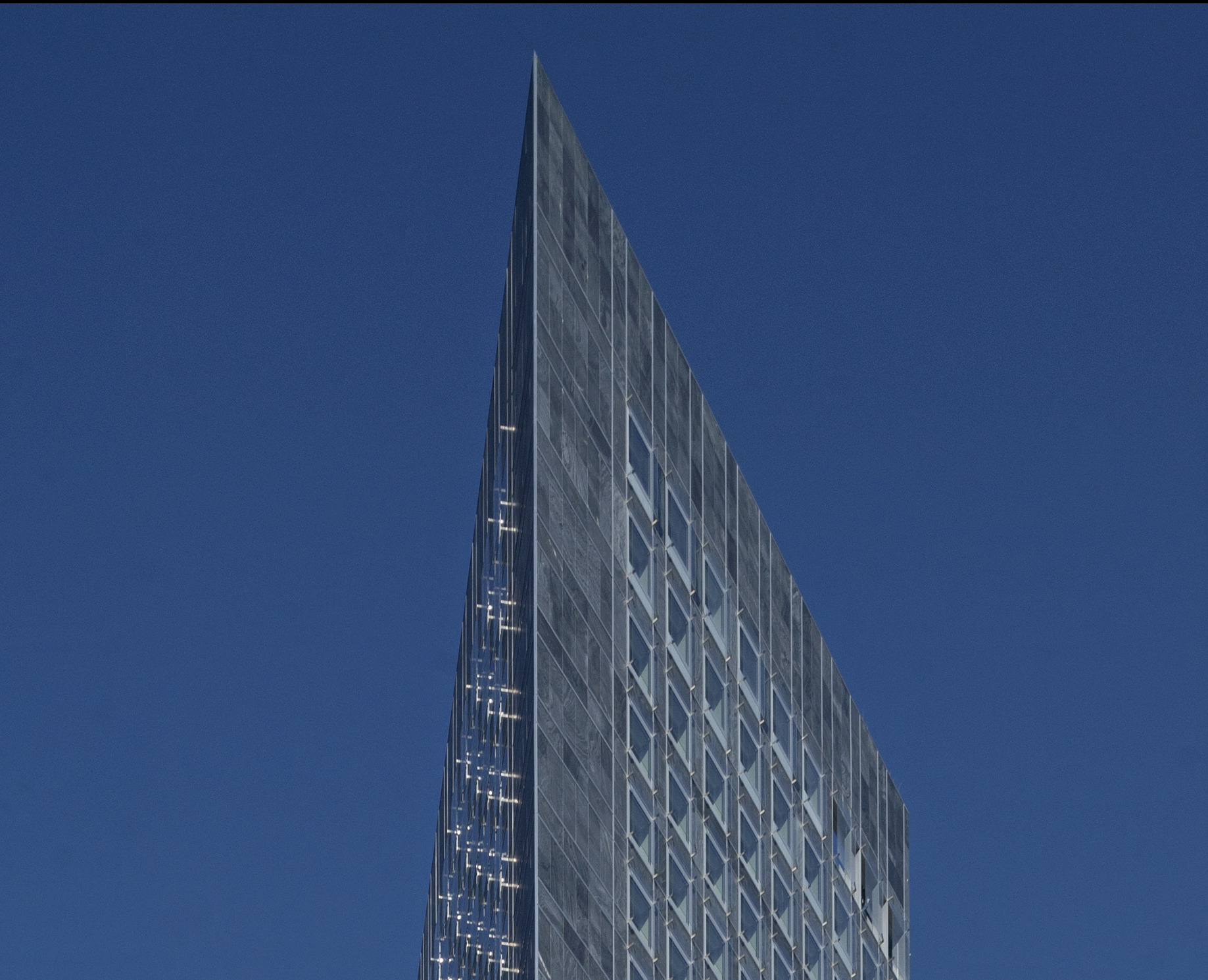
LANDSCAPE
PR 609
Tower
Puteaux-La-Défense
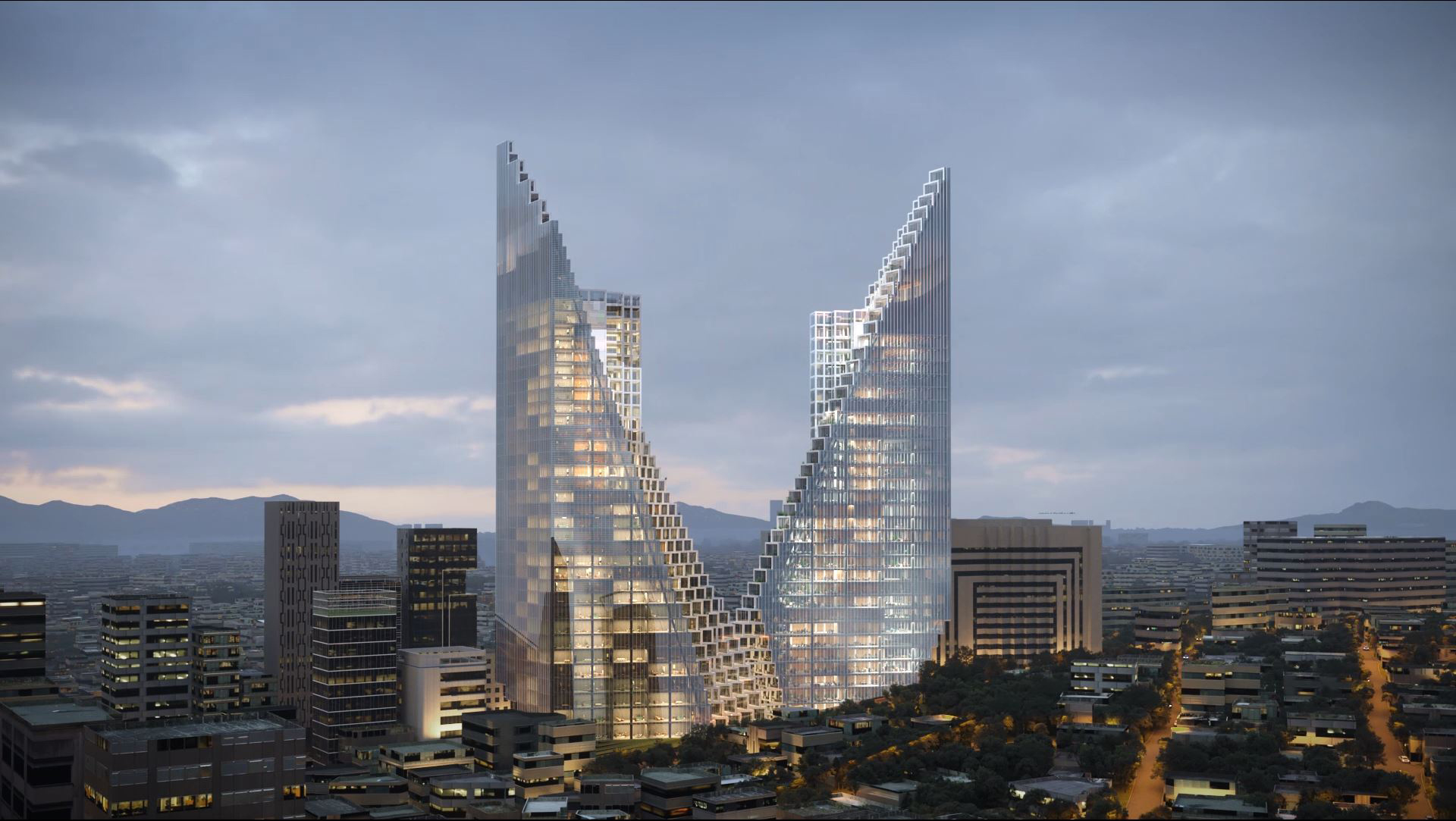
TWIN PEAKS – BONGEUNSA-RO 120
PR 667
Tower
Seoul
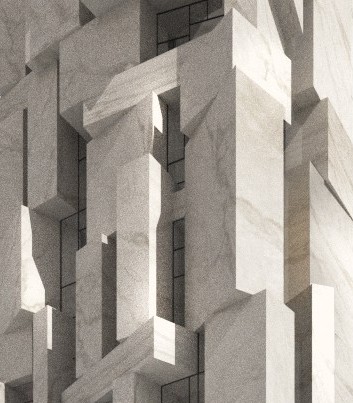
ONE CHEONGDAM-DONG
PR 650
Tower
Seoul
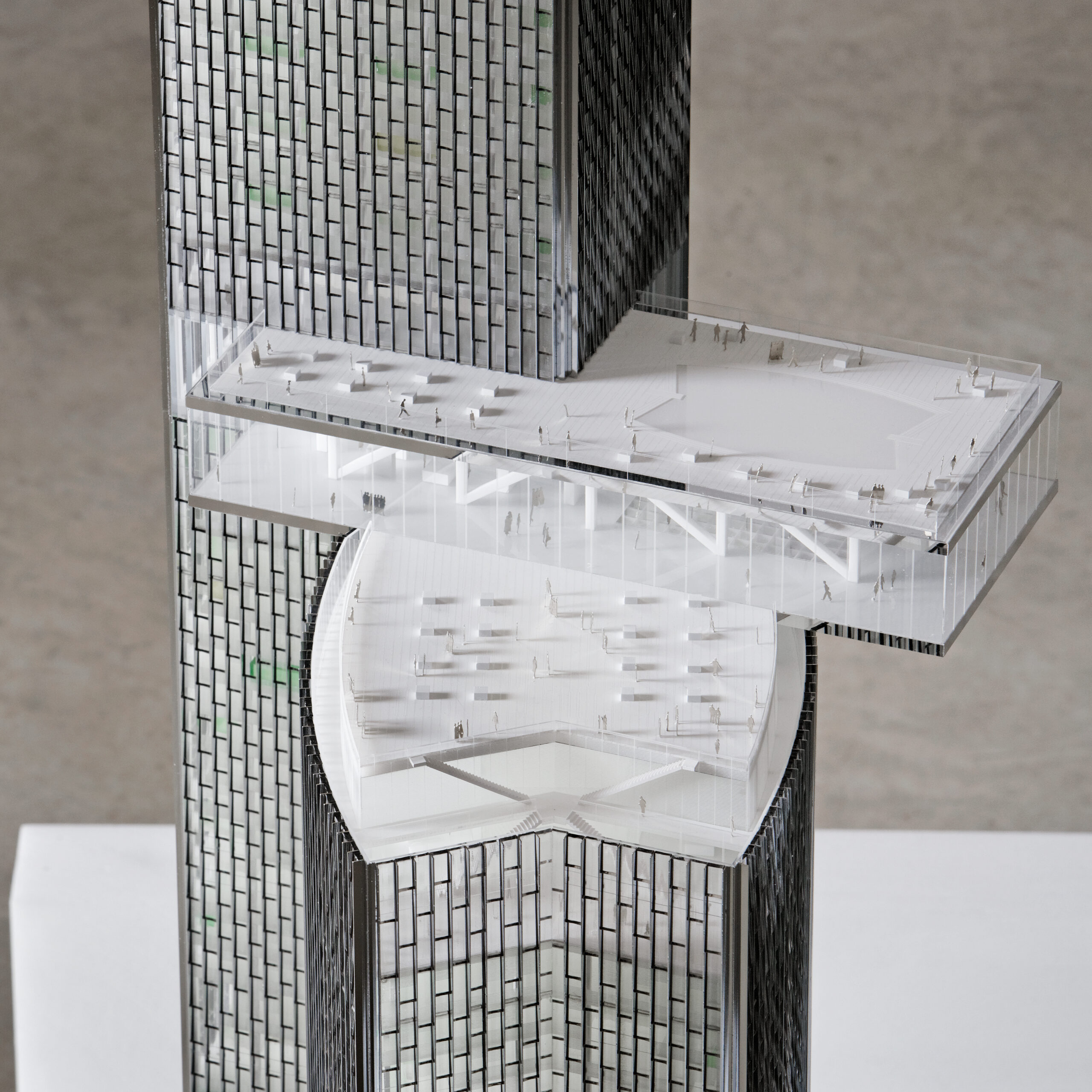
VERTICAL CITY
PR 524
Tower
Montparnasse – Paris
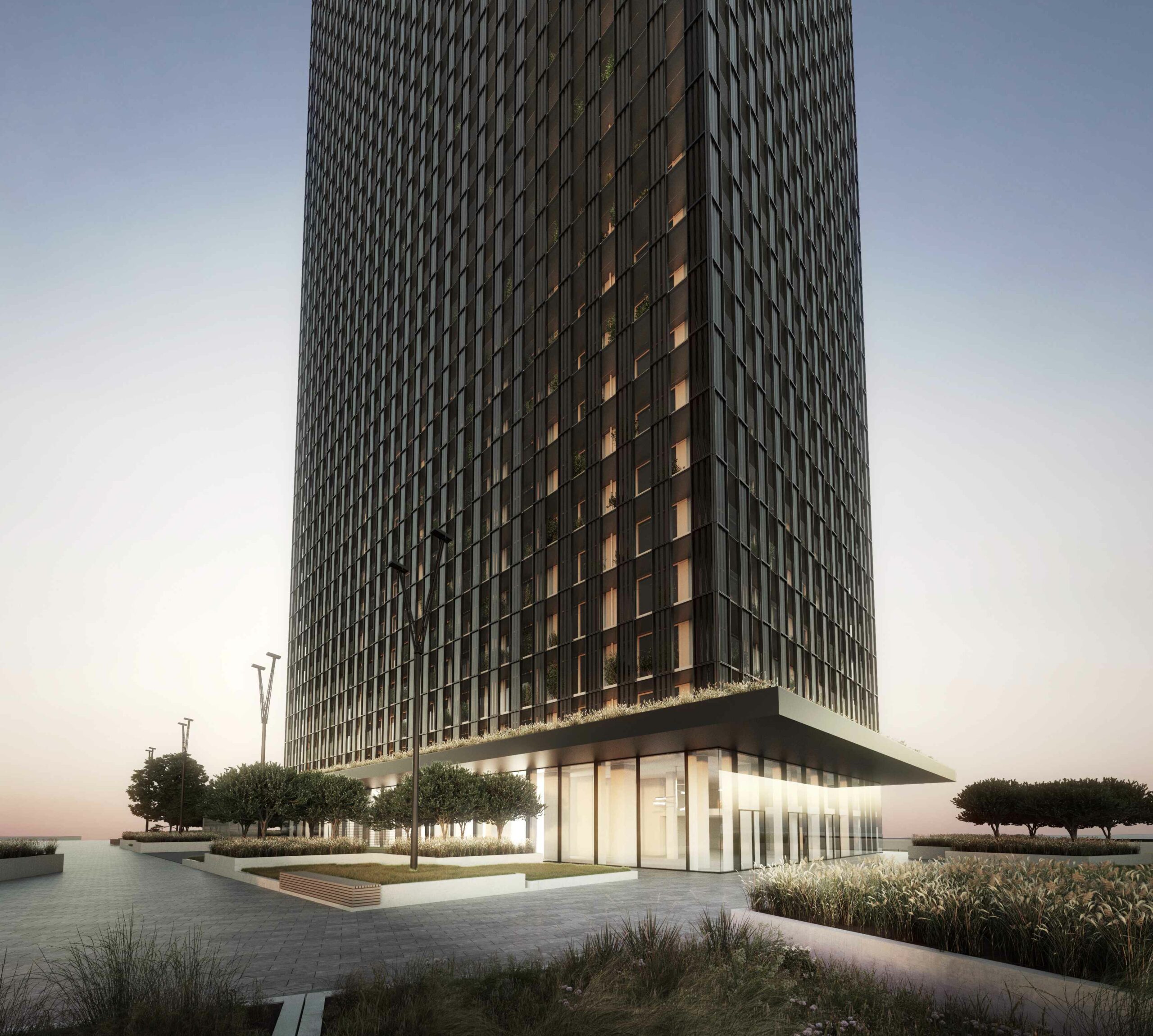
DONAU CITY TOWER II
PR 661
Tower
Vienna
MESH / MAILLE
RE 001
Research
APGUJEONG’S DISTRICT II
PR 642
Masterplan
Seoul
FRENCH QUARTER TOWERS
PR 330
Tower
Brisbane
GROUNDSCAPE
RE 002
Research
TO LYON
PR 638
Tower
Lyon
DONAU CITY TOWER I
PR 485
Tower
Vienna
